Roof Leak Water Damage in Tampa, FL
Rainy season storms test every seam, vent and flashing. When water gets past the roof, crews dry the attic, ceiling and walls below, with records an adjuster can follow.
(888) 621-2041Name the rooms under the damage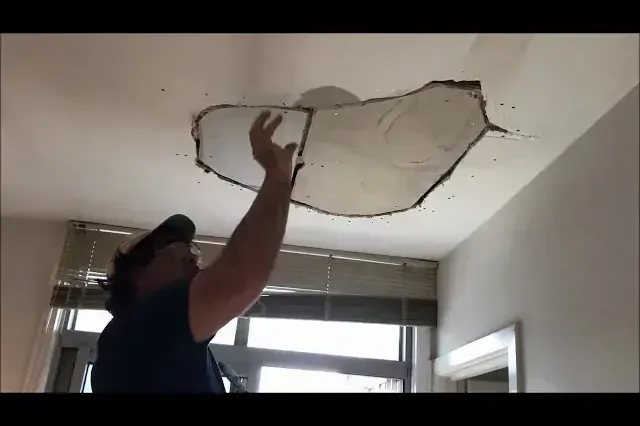
According to NOAA, the Tampa Bay watershed averages 50 to 56 inches of rain a year, with more than half falling from June to September. A roof gets tested hardest just when humid air makes wet materials slow to dry. Checking the attic after each big storm catches problems early.
First steps for roof leak water damage
- 1
Look from inside
Check the attic with a flashlight for wet insulation and dripping.
- 2
Limit the water
Place buckets, move belongings and cover furniture under the leak.
- 3
Cover the roof
Call a roofer for a tarp, since new rain will rewet the area.
- 4
Photograph the damage
Capture the ceiling, attic and any stained walls with dates.
What does roof leak water damage cost in Tampa, FL?
A caught-early roof leak with one stain costs around $1,200 to $3,500, wet insulation and ceiling work $3,500 to $8,000, and a long-running leak across rooms $8,000 to $16,000, before roof repairs.
Early catch, one stain
- Attic inspected
- Ceiling dried in place
- Daily readings
Insulation and ceiling
- Wet insulation out
- Drywall removed
- Cavity dried
Several rooms or weeks
- Framing dried
- Wall flood cuts
- Long monitoring
These are typical ranges, not a quote. The water category, the square footage, the material class and how soon drying began change the total most, and the water damage cost calculator narrows the range.
How roof leak water damage is handled, step by step
The walkthrough starts with a moisture map, so the drying plan matches what is truly wet. Air movers and dehumidifiers stay until the meters read dry, not until the surface looks dry.
Inspect the attic
Meters trace the wet insulation and framing.
Remove the wet layers
Soaked insulation and ceiling drywall are bagged out.
Dry the structure
Equipment runs once the roof is covered.
Record the loss
Photos and daily logs go into one file.
Where roof water goes
A small breach lets water run along rafters, soak attic insulation and settle on the ceiling below. Roof valleys, chimneys, vents and skylights are common entry points, and by the time a stain shows, the wet area above is usually larger.
- Wet attic insulation is removed and bagged
- Sheathing and rafters are checked for moisture
- Attic floors are scanned with a thermal camera
- Ceiling drywall below is opened if it sags
- Walls below are checked for water running down
Stopping the water first
Drying cannot begin until the roof is tarped or repaired, because new rain undoes the work. A roofer handles the opening; the restoration crew handles the wet structure and records the condition so the claim reflects the whole loss.
- Temporary cover is documented with photos
- Drying equipment starts once the opening is closed
- Daily readings continue until framing is dry
Big storms and roof damage
After a major storm the roof is often one of several entry points. For wind-driven damage see hurricane water damage, and for ceilings already stained see ceiling leak water damage. Photos taken before cleanup help show what failed first.
Roof leak water damage here and in nearby towns
Roof leak crews serve Seminole Heights, Hyde Park, Palma Ceia, Ybor City and West Tampa homes, along with ZIP codes such as 33604 and 33609 that can cross city limits.
The same service nearby: roof leak water damage in Hudson, Belleair, Tarpon Springs.
Every water damage service for this town · every town covered
Related water damage services in Tampa
Roof Leak Water Damage questions, answered
How can I tell if a roof is leaking inside?
Look for stains that appear after rain, damp insulation in the attic, drips near vents and fixtures, or peeling paint on upper walls. A meter shows what the eye cannot.
Does the crew repair the roof?
No. A roofer handles roof repair or a temporary cover. The restoration crew dries the attic, ceiling and walls and keeps records, and the two jobs are coordinated by timing.
Why does humid weather make roof leaks worse?
Humid air slows evaporation, so wet insulation and framing stay wet longer, which feeds bacteria and odor. Prompt removal of soaked insulation shortens the dry-out.
Can I leave wet attic insulation to dry on its own?
Rarely. Wet insulation traps moisture against framing and drywall for a long time, especially in humid air, so removing soaked sections is usually faster than waiting.
Will insurance pay for roof leak damage?
Coverage depends on the policy and the cause of the opening, so ask your own insurer. Photos, dates and the crew's moisture logs help the adjuster see what the storm damaged.
Roof water keeps soaking the attic
Insulation and framing stay wet while the roof is open, so call now to start removal.
(888) 621-2041Start drying the attic- Crews sent out day and night
- Dried to the IICRC S500 standard
- Daily readings for the adjuster
- Find us on Google