The Sponge Docks along Dodecanese Boulevard hold restaurants, gift shops and boats that serve visitors. They also sit where the Gulf, the Anclote River and the city's storm sewers meet. When water comes in, a business owner has little time to lose.
Key takeaways
- The city says frequent and chronic tidal flooding happens in low locations because roads connect to tidal water through storm sewers.
- City check valves cannot stop flooding when heavy rain coincides with a high tide unless pumps are also added.
- Hurricane Idalia in August 2023 and Hurricane Helene in September 2024 both put salt water into Sponge Docks businesses.
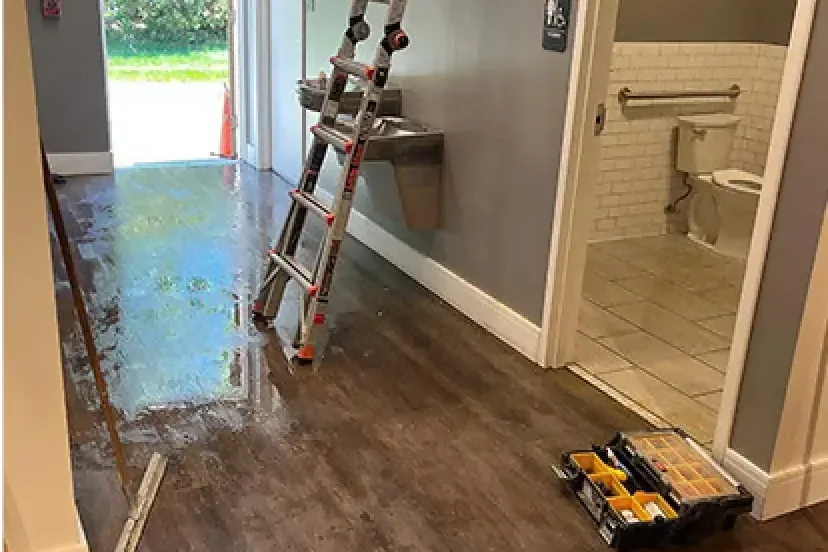
- Even a couple of inches of seawater can ruin wood floors, so flooring decisions come early.
- Phased drying keeps unaffected rooms open while the wet area is dried.
Why the Sponge Docks flood
The city says frequent and chronic tidal flooding happens in many low locations because roads and nearby ground connect to tidal water bodies through storm sewers. High tides that coincide with a new or full moon, called spring tides or king tides, can flood low streets on sunny days.
The city's own examples of tidal flooding are Dodecanese Boulevard and Canal Street at Roosevelt Boulevard. It has installed tidal check valves in storm sewers at Dodecanese Boulevard at Hope Street, Athens Street and Arfaras Street, and at several other locations.
- Check valves keep tidal water from backing up through storm sewers.
- The city says they cannot stop flooding when heavy rain coincides with a high tide unless pumps are also added.
- The Sponge Docks are also listed by local news in Evacuation Zone A.
What recent storms did to the waterfront
Idalia and Debby
On August 30, 2023, storm surge from Hurricane Idalia lifted the Anclote River, and local reports described the flooding for businesses as the most severe in decades.
On August 5, 2024, flood water blocked a section of Dodecanese Boulevard while Hurricane Debby passed offshore.
Helene
During Hurricane Helene on September 26 to 27, 2024, seawater flowed deep into businesses along the Sponge Docks, according to local reporting.
One shop owner said about two inches of Idalia seawater ruined her wood floors, which shows how little water it takes.
The first hours for a business owner
A business has more to protect than a house: stock, equipment, records and customers. The first hours decide how much of it survives.
- Turn off power to the wet area at the panel if it is dry and safe to reach.
- Keep staff and customers out of standing water, which can hide cords and glass.
- Photograph the water level, the damaged stock and the equipment before anything moves.
- Lift inventory and paper records onto dry shelves.
- Call the landlord, the insurance carrier and a restoration team once everyone is safe.
Salt Water and Floors
Seawater is heavier than rainwater on a floor. It carries salt and silt, and it soaks into seams and subfloors.
Each floor type reacts differently, so the choice between drying and replacing is made early, with readings.
- Wood floors cup and buckle fast, and salt keeps them damp.
- Laminate swells at the seams and rarely dries flat.
- Tile often survives, but the bed and the grout under it hold moisture.
- Carpet and pad that took salt water are removed.

Outlets, walls and equipment
Water that reaches outlets, switches and wall cavities can damage wiring long before the surface looks wrong. Salt speeds corrosion, so metal parts that were wet need attention even after they dry.
An electrician checks anything that was under water, and kitchen or shop equipment is inspected before it runs again. The restoration team works around those checks so drying is not delayed.
- Keep the breaker off for any circuit that touched water.
- Do not power up coolers, registers or tools that sat in salt water until they are checked.
- Photograph model plates and damage before equipment is moved.
Phased drying that keeps doors open
Commercial water damage work is planned around the business. The crew sets containment, maps moisture in shared walls and dries the wet area first.
When neighbors or other rooms are dry, they stay open while structural drying continues behind the barrier.
In a row of connected storefronts, water in one unit can wick into the shared wall of the next. The crew checks both sides of every shared wall before a neighbor is called dry.
- Containment keeps dust and silt out of rooms that are still open.
- Equipment is placed to dry the wall and floor cavities without blocking exits.
- Daily readings tell the owner when each room can reopen.
- A neighboring unit is scanned with a moisture meter even when it looks dry.
Salt, silt and contamination
Tidal and surge water on a commercial waterfront is treated as contaminated. Storm surge flood cleanup removes what the water touched and washes the rest.
Food areas, restrooms and storage rooms get extra attention, because silt and sewage can reach them through floor drains.
- Porous materials such as drywall and insulation come out above the water mark.
- Hard surfaces are washed and treated with an EPA registered antimicrobial.
- Floor drains are cleared and sanitized as part of the cleanup.
Prepare for the next high tide
The city's Sponge Docks Flood Abatement Project is planned to use underground piping, a vault and a pump station to move floodwater out faster. The city commission approved state design funding in December 2025.
That project is still a plan. Until it is built, a business plan for tides and storms is the best protection.
A business that has a plan, a photo inventory and the right phone numbers ready loses fewer days when the water comes.
- Keep a move up list for stock, with the most valuable items first.
- Know where the electrical panel and the main water shutoff are.
- Keep an inventory and photos of equipment in a place away from the building.
- Watch the king tide dates, which fall on a new or full moon.
Questions
Why do the Sponge Docks flood on sunny days?
The city says spring tides or king tides on a new or full moon can flood low streets on sunny days, because roads connect to tidal water through storm sewers.
Do the check valves stop the flooding?
Not always. The city says check valves cannot stop flooding when heavy rain coincides with a high tide unless pumps are also added.
How much seawater ruins a wood floor?
Very little. One shop owner said about two inches of seawater from Hurricane Idalia ruined her wood floors.
Can a business stay open during drying?
Often, in part. Phased drying uses containment so dry rooms stay open while the wet area is dried.
Is the Sponge Docks flood project finished?
No. The city describes the Sponge Docks Flood Abatement Project as planned, with state design funding approved in December 2025.
What records does a business owner need after a flood?
Photos of the water level and damaged stock, a list of equipment and inventory, and the daily moisture readings from the drying team. Landlords and carriers ask for these.
What should a business do before a king tide?
Lift stock and records off the floor, know where the panel and the water shutoff are and keep a photo inventory. King tides fall on a new or full moon, so the dates can be tracked.