Manufactured Home Water Damage in Port Richey, FL
Water in a manufactured home reaches the subfloor and belly wrap quickly. Crews check the floor from above and from below, remove what failed and dry the frame.
(888) 621-2041Soaked belly wrap? Start here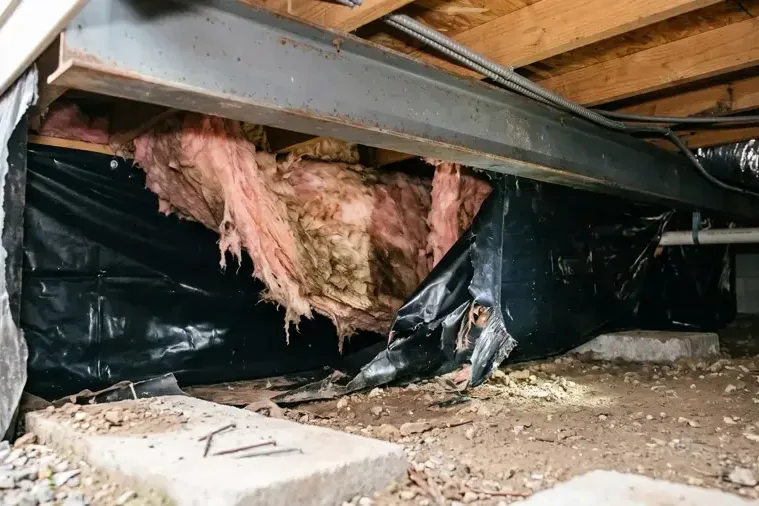
A manufactured home has a layered floor system, so water has to be tracked from above and below. A leak can soak the floor covering, the decking and the belly wrap insulation beneath, and each layer dries at its own pace.
First steps for manufactured home water damage
- 1
Stop the water
Close the supply valve or move out of the flood path.
- 2
Keep weight off the floor
Avoid walking on soft or spongy areas near wet spots.
- 3
Photograph above and below
Take pictures of the floor and any torn belly wrap.
- 4
Call for a floor check
Crews use meters from above and probe below.
What does manufactured home water damage cost in Port Richey, FL?
Manufactured home jobs typically run $1,500 to $4,000 for one room caught early and $4,000 to $9,000 when the subfloor and belly wrap are wet. Storm jobs reach $9,000 to $18,000.
One room early
- Water extracted
- Subfloor readings
- Dried in place
Subfloor and belly
- Wet insulation out
- Failed decking replaced
- Frame dried
Storm or whole floor
- Contaminated removal
- Belly wrap replaced
- Extended drying
These are typical ranges, not a quote. The water category, the square footage, the material class and how soon drying began change the total most, and the water damage cost calculator narrows the range.
How manufactured home water damage is handled, step by step
The walkthrough starts with a moisture map, so the drying plan matches what is truly wet. Air movers and dehumidifiers stay until the meters read dry, not until the surface looks dry.
Read from both sides
Meters above and probes below map the wet area.
Open the belly
Torn wrap is opened to reach soaked insulation.
Remove and dry
Wet insulation and failed decking come out, then drying starts.
Verify the frame
Readings confirm the framing is dry before repairs.
What gets wet in the floor
Water passes through flooring into the decking, then into the insulation held under the belly wrap. Because that space is closed, it stays damp long after the surface feels dry.
- Floor covering and underlayment soak first
- Decking can swell, soften and delaminate
- Belly insulation holds water against the floor
- Wet framing stays damp inside a closed cavity
Storms and low ground
The city newsletter puts most of the city in a flood zone only a few feet above high tide, so a manufactured home that takes on flood water also needs the underside checked. Hurricane season, June through November, brings both rain and rising water.
- Flood water under the floor is handled as contaminated
- Belly wrap is opened to check the insulation
- Sagging insulation is removed and replaced
- Decking that failed is replaced after drying
Repairs after drying
Once readings are normal, failed decking and torn belly wrap are replaced. A restoration crew dries and documents the loss, while a separate contractor handles floor and belly replacement. For the first stage see water extraction.
Manufactured home water damage here and in nearby towns
Manufactured home calls are taken across ZIP code 34668, with response reaching Ironbark Drive, Westport, Ridge Road, Bay Boulevard and anywhere west of U.S. 19.
The same service nearby: manufactured home water damage in Hudson, New Port Richey, Tarpon Springs.
Every water damage service for this town · every town covered
Related water damage services in Port Richey
Manufactured Home Water Damage questions, answered
Why check under a manufactured home floor?
Water drops through the floor into insulation held under the belly wrap, and that space stays wet long after the surface dries.
Can wet decking be dried?
Sometimes, if it is firm and readings drop. Swollen or soft decking is replaced, since it will not carry weight reliably.
Is the belly wrap always replaced?
Only the torn or soaked sections. Intact wrap is kept, and new wrap goes on after the insulation is dry.
Does flood water change the job?
Yes. Flood water can carry sewage and debris, as the city warns, so wet insulation and floor layers are removed instead of dried.
Does hurricane season matter for these homes?
The city newsletter calls June through November the biggest threat of general flooding. Storms add roof and window leaks as well as rising water.
Who replaces the floor and belly wrap?
A contractor handles replacement after drying. The restoration crew dries the structure and records readings so repairs start on a dry frame.
Water hides under the floor
Crews read the floor from above, open the belly where needed and dry the frame until readings agree. One call starts it.
(888) 621-2041Start the home dry out- Crews sent out day and night
- Dried to the IICRC S500 standard
- Daily readings for the adjuster
- Find us on Google