Roof Leak Water Damage in New Port Richey, FL
Heavy rain finds weak flashing and worn shingles. Crews check the attic, remove wet insulation and dry the ceilings and walls below before a small leak becomes a ceiling failure.
(888) 621-2041Describe the rain leak overhead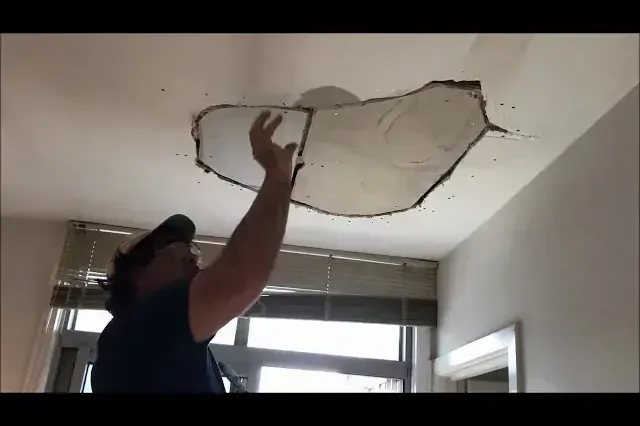
Rain here is heavy and steady, with over 50 inches in a typical year and 70.9 inches in 2019. Roofs take a beating, and the water often reaches the ceiling long after it got through. A quick look at the attic often shows how far it went.
First steps for roof leak water damage
- 1
Tarp it if safe
A temporary cover limits more rain, but never climb a wet roof to place it.
- 2
Contain the drip
Buckets and plastic sheeting protect the floors and furniture below.
- 3
Photograph the damage
Record the stain, the attic view if it is safe, and any visible roof damage.
- 4
Call for drying
Wet insulation and drywall are removed and the cavity is dried.
What does roof leak water damage cost in New Port Richey, FL?
A stain caught early often costs $1,200 to $3,500 to dry. Once insulation and ceiling drywall are wet it runs $3,500 to $8,000, and a long running leak can reach $16,000.
One stain, caught early
- Attic checked
- Ceiling dried in place
- Daily readings
Insulation and ceiling wet
- Insulation removed
- Drywall cut out
- Cavity dried
Several rooms, long leak
- Sheathing and framing dried
- Wall flood cuts
- Longer drying
These are typical ranges, not a quote. The water category, the square footage, the material class and how soon drying began change the total most, and the water damage cost calculator narrows the range.
How roof leak water damage is handled, step by step
The walkthrough starts with a moisture map, so the drying plan matches what is truly wet. Air movers and dehumidifiers stay until the meters read dry, not until the surface looks dry.
Inspect the attic
Meters and imaging show where the deck is wet.
Remove the wet
Soaked insulation and soft drywall are cut out.
Dry the structure
Air movers and dehumidifiers run until framing is dry.
Document the loss
Photos and readings go in the file.
How rain gets in
Water follows the path of least resistance, so a small gap can wet a large area. It runs along rafters and soaks the insulation before it ever stains the ceiling. Hurricane season adds wind, which lifts shingles and drives rain sideways under them.
- Cracked or lifted shingles after a storm
- Failed flashing around vents and chimneys
- Worn sealant at skylights and roof edges
- Debris that holds water against the roof deck
What gets checked
A crew inspects the attic with a moisture meter and thermal imaging, because the underside of the roof deck shows what the shingles hide. Wet insulation comes out first, since it holds water against the ceiling. Readings taken in the attic are compared with a dry spot elsewhere in the house.
- Roof deck and rafters read for moisture
- Insulation weighed down with water
- Ceiling drywall softening below
Repair and permits
Drying and roof repair are separate jobs. A tarp stops the next rain, and the city's Building Division requires a permit for a roof replacement, so the permanent work is planned with a roofer. Once the roof is fixed, the drywall is patched and painted.
Roof leak water damage here and in nearby towns
Roof leak crews cover the city and its mailing area, ZIP codes 34652 to 34656, including Madison Street, Massachusetts Avenue and the neighborhoods around Sims Park.
The same service nearby: roof leak water damage in Hudson, Port Richey, Tarpon Springs.
Every water damage service for this town · every town covered
Related water damage services in New Port Richey
Roof Leak Water Damage questions, answered
How much rain does it take to leak?
Not much if flashing or shingles have failed. A Gulf storm that put nearly two inches of rain on the city by 7 a.m. in May 2014 is the kind of event that shows every weak spot.
Does a roof replacement need a permit?
Yes, the city's Building Division requires permits for roof replacements. A temporary tarp and the interior dry out are separate steps and usually go ahead first.
Should wet insulation come out?
Usually, yes. Wet insulation holds water against the ceiling, loses its value as insulation and keeps the drywall damp, so it is removed and replaced after drying.
Does hurricane season change the plan?
It raises the stakes. Storms test roofs hard, so a tarp goes on quickly and the dry out is planned around possible power loss and the next round of rain.
Will the leak come back after drying?
It will if the roof is not repaired. Drying removes the water but not the cause, so a roofer should fix the gap before the ceiling is closed.
Rain keeps finding the same gap
Each storm pushes more water into insulation and drywall. A call sets up drying while the roof is repaired.
(888) 621-2041Point out the drip- Crews sent out day and night
- Dried to the IICRC S500 standard
- Daily readings for the adjuster
- Find us on Google