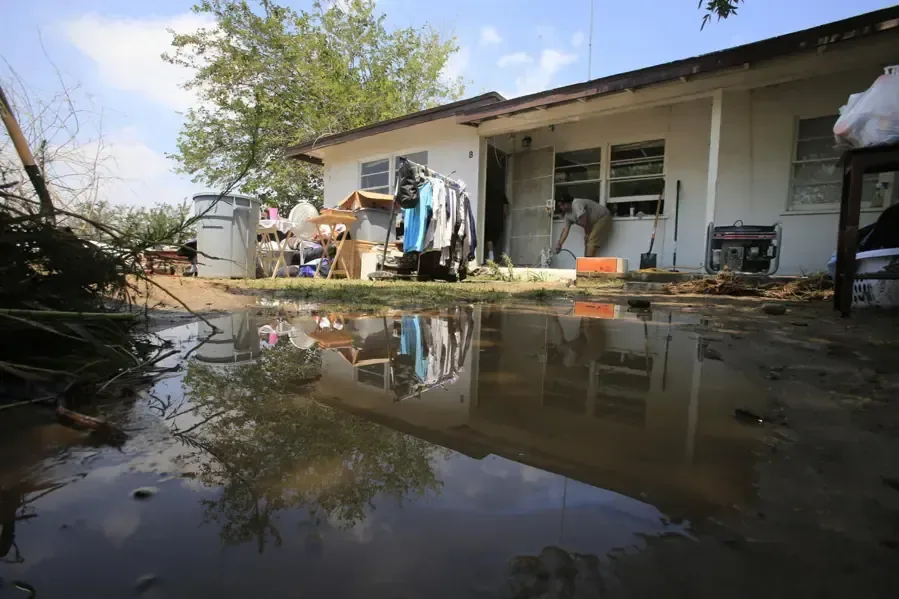
The Port Richey Fire Department said the city saw devastating flooding during Hurricane Helene in September 2024. Homes along Bay Boulevard, west of U.S. 19, were still dealing with flood water on September 27. For an owner standing in a wet house, the question is what happens next.
Key takeaways
- The city newsletter says most of Port Richey is in a flood zone and sits only a few feet above high tide.
- Flood water may be contaminated by sewage leaks and debris, so it is handled as Category 3.
- Drywall, insulation, carpet and swollen cabinets that the water touched come out before drying starts.
- The slab and framing are cleaned, treated and dried to readings before rebuilding or raising a house.
- Photos and a daily moisture log protect the owner during repairs and permits.
What Helene did to Port Richey
The Port Richey Fire Department described devastating flooding in the city during Hurricane Helene on September 26 to 27, 2024. Homes along Bay Boulevard, west of U.S. 19, were still flooded on September 27.
After the water, one Bay Boulevard home showed flood level markings on its walls, and furniture had floated to the entryways. A family there said Helene was the fourth major storm they had been through since moving to the city.
Why surge water reaches homes here
The city newsletter says most of Port Richey is in a flood zone and sits only a few feet above high tide. Most of the city is in Evacuation level A, which generally includes residents along the Pithlachascotee River and those west of U.S. 19.
The same newsletter calls hurricane season, June through November, the biggest threat of general flooding.
- Hurricane Idalia in August 2023 pushed storm surge into low lying Pasco County coastal homes.
- In June 2017, Pasco County demolished houses for flood relief in one of the hardest hit areas of the city.
- Water that reaches a low lot has few places to drain, so it can sit in a house for hours.
Flood water in a house is not clean water
The city warns that flood water may be contaminated by sewage leaks and debris. A restoration team treats it as Category 3 from the moment it enters the house.
That changes the order of work. Removal and cleaning come first, and drying comes after.
The work follows the standards of storm surge flood cleanup, where every removed material and every reading is recorded.
- Protective gear and containment for the work area.
- HEPA air scrubbers running while contaminated material is removed.
- Porous materials such as drywall, insulation and carpet pad cut out and bagged.
- Hard surfaces washed and treated with an EPA registered antimicrobial.
First steps for an owner after flooding
Before any cleanup begins
Stay out of the house until the power is off and the water has dropped. Standing flood water can hide debris and live wiring.
A short written plan also helps: who shuts off the power, who calls for extraction and who takes the photos.
- Photograph the water marks, the damage and the contents before moving anything.
- Keep a list of what was soaked, room by room.
- Do not run fans or the AC while contaminated material is still in the house.
Sandbags and the next storm
The city says sandbags may be available at City Hall when flooding is possible, and it says not to stack them against the outer walls of a building.
Sandbags slow water at a doorway. They do not stop surge, so a plan for the house still matters.
Extraction, tear out and drying
Getting the water out
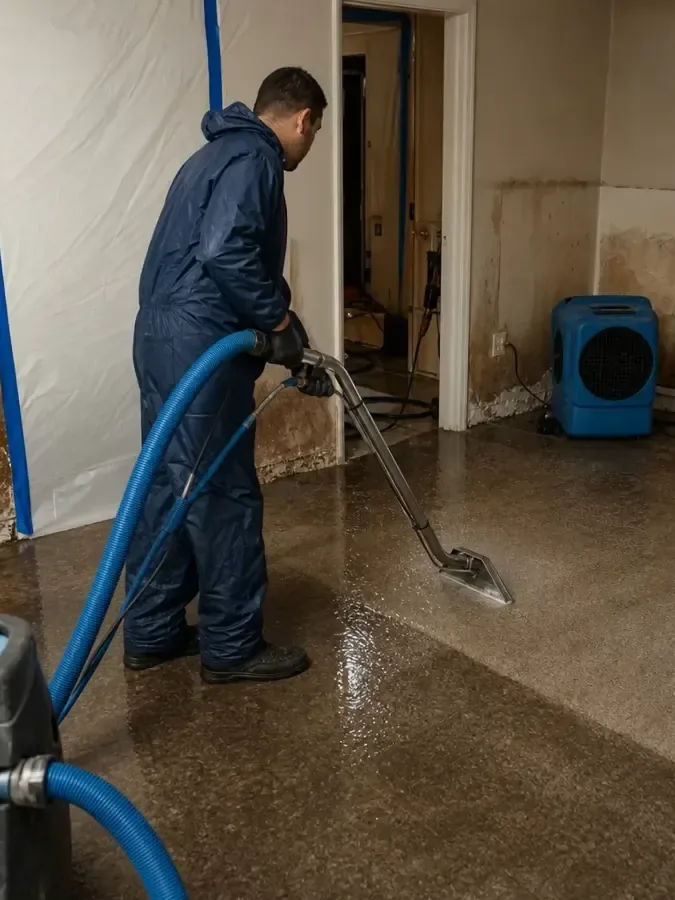
Standing water goes first through water extraction, using pumps and truck mounted units. Silt is shoveled and washed from floors and wall bottoms.
Wet drywall and insulation are cut above the high water mark, so the wall cavity can be seen and cleaned.
Drying the structure
After the cleaning, structural drying starts with LGR dehumidifiers and air movers. Readings on the slab and framing show when the house matches a dry reference.
- Typical drying runs 5 to 10 days after the tear out.
- Salt and silt are washed off before fans start.
- Readings are written down every day.
Belongings, appliances and what to keep
Flood water ruins soft goods and contaminates anything it covers. Sorting early keeps the cleanup moving and keeps the list honest.
Items are sorted into three groups: what can be cleaned and kept, what must be discarded, and what needs a closer look before anyone decides.
- Mattresses, upholstered furniture and carpet that sat in flood water are discarded.
- Solid wood and metal items can often be washed and treated.
- Photographs and documents are dried by freezing or by a specialist, not by leaving them wet.
- Keep a written list of each discarded item and a photo taken before it leaves the house.
Appliances and electronics
Refrigerators, washers and electronics that were in the water should not be plugged in until a technician checks them. Silt and salt can hide inside motors and circuit boards.
The restoration team moves heavy items so the floor under them can be cleaned and dried.
Sewage and lift stations after a flood
The city operates 44 sewer lift stations and performs weekly maintenance on them. After a storm, power and water levels affect how they run.
If sewage came up through a drain, the work follows the same Category 3 rules, with the added step of treating the drain area. Sewage backup cleanup is a separate scope from flood removal, even when both happen in one house.
Raising or rebuilding starts with a dry house
One Bay Boulevard family told reporters after Helene that they had applied for grants to raise their house or build new. Either path needs a structure that is clean and dry first.
The city building permit application requires plans covering structural, electrical, plumbing and mechanical work, so the moisture log helps the contractor see what is sound.
A house that was hit by surge and wind together needs both hurricane water damage and flood work, handled in order.
- Ask for the final readings in writing.
- Keep photos of the cut locations and removed materials.
- Hand the log to the contractor before any new drywall goes up.
Questions
Why is flood water treated as Category 3?
The city warns that flood water may be contaminated by sewage leaks and debris. Category 3 means the water is grossly contaminated, so porous materials it touched are removed.
Can wet drywall from a flood be saved?
Usually not. Drywall and insulation soaked by flood water are cut out above the water mark, and the framing is cleaned and dried.
How long does a flooded home take to dry?
Typical drying runs 5 to 10 days after the tear out, and daily readings decide when it ends.
Should I run the air conditioner right after a flood?
Not until contaminated material is out. Running it earlier can move silt and odors through the house.
Does the house have to be dry before raising it?
Yes. Raising or rebuilding works on a structure that has been cleaned and dried, and a written moisture log shows the contractor what is sound.
What is a moisture log?
It is a daily record of meter readings on the slab, the walls and the framing, written next to a dry reference. It shows when drying is finished and gives a contractor a clear starting point.