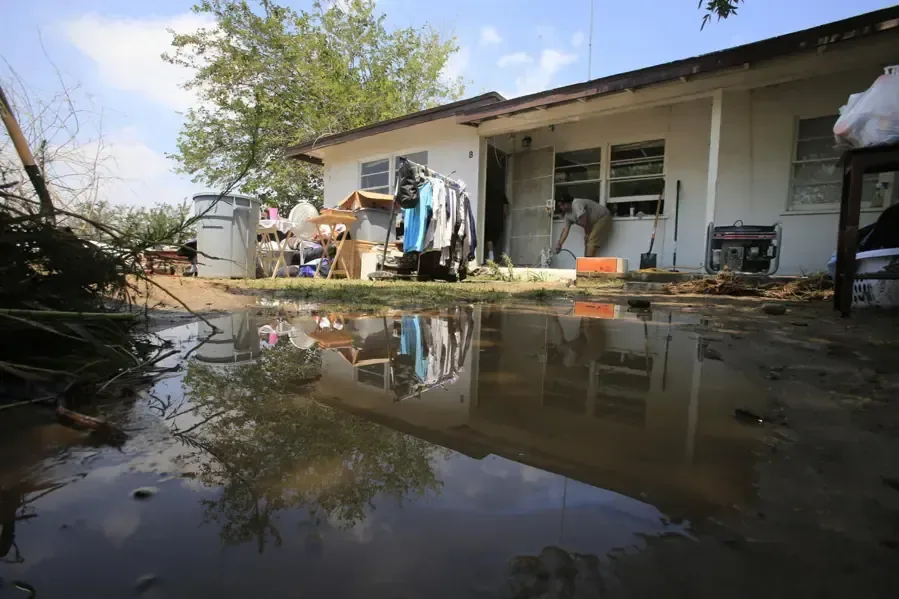
Hudson sits on the Gulf of Mexico, with saltwater canals west of US 19 and the shoreline at Hudson Beach. When a hurricane pushes Gulf water ashore, the homes closest to the canals take it first. What the water leaves behind is salt, silt and contamination, and the cleanup starts with removal, not fans.
Key takeaways
- Surge water counts as Category 3: it carries salt, silt, fuel and sewage, so porous materials it touched come out.
- Helene in September 2024, Idalia in August 2023 and the March 1993 Storm of the Century all sent Gulf water onto this coast.
- With no basement, surge water sits on one level against walls, cabinets and flooring, and wicking starts at the floor.
- Drywall and insulation are cut above the high water mark, and the slab and framing are cleaned before any drying begins.
- Photos and daily moisture readings build the record a flood adjuster needs.
Why canal street homes take surge first
Saltwater canals west of US 19 open to the Gulf. When the Gulf rises, water can back into the canals and spill onto the lots and streets beside them.
Surge from Hurricane Helene in September 2024 and Hurricane Idalia in August 2023 reached the Pasco coast, and the March 1993 Storm of the Century surge flooded this coast as well.
Most homes here are single story block houses on a slab. Water that gets inside spreads across one level instead of draining to a lower floor.
After a surge, the first question is not what looks wet, but what the water carried in with it.
- No basement means the water stays at floor level, soaking cabinets, wall bottoms and flooring all at once.
- Slab homes keep moisture in the concrete long after the standing water is gone.
- Salt in the water stays on every surface it touched.
Why surge water is Category 3
Surge water is contaminated from the moment it crosses the threshold. It carries salt, silt, fuel, yard chemicals and sewage from overwhelmed drains.
That changes the work. A pipe leak can often be dried in place, but a surge loss starts with removing what the water touched.
The same Category 3 rules apply whether the water stood in the house briefly or for a full day. Time only makes the silt harder to wash out.
- Salt keeps pulling moisture out of the air, so materials that look dry can stay damp.
- Silt settles into baseboards, cabinet bases and the bottoms of walls.
- Porous materials such as drywall, insulation and carpet pad cannot be made clean once surge soaks them.
What comes out and what stays
One rule decides removal versus cleaning: porous materials come out, solid ones get cleaned.
Materials that come out
The crew cuts drywall and insulation above the high water mark, because surge water wicks upward behind the paint.
Cabinets made of particleboard swell from the bottom and rarely recover, while solid wood pieces can sometimes be cleaned and dried.
- Drywall and insulation cut out above the water mark.
- Carpet, pad and swollen lower cabinets removed.
- Baseboards and trim pulled so the wall bottoms can be cleaned.
Materials that can be cleaned
Block walls, the slab and wall framing can usually be cleaned and dried. Hard surfaces get washed, then treated with an EPA registered antimicrobial.
Tile on the slab can stay if it is set well and the readings under it drop to a dry reference.
Cleaning the slab and framing
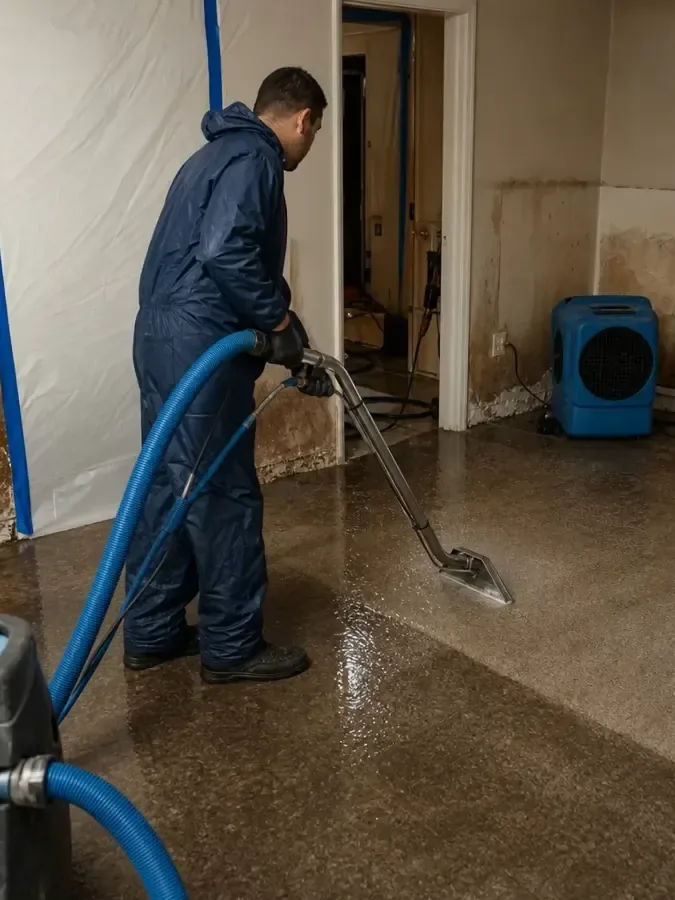
Containment goes up first, and the crew works in protective gear with HEPA air scrubbers running. Standing water and silt are extracted before anything is scrubbed.
Silt and salt are washed off the slab and the framing. Drying begins only after the contaminated material is gone, because drying a contaminated wall just locks the problem in.
Air scrubbers stay on until the last contaminated material leaves, so fine dust from the cuts does not settle in clean rooms.
- Extraction of the remaining water and silt.
- Flood cuts and removal under Category 3 rules.
- Washing, antimicrobial treatment and a final moisture scan.
Drying after the tear out
Once the house is clean, structural drying starts. LGR dehumidifiers and air movers run with the house closed, and the AC helps pull humidity out of the air.
Typical drying runs 5 to 10 days after the tear out. Readings on the slab, the block and the framing decide when it ends.
- Moisture readings taken every day and written down.
- Surfaces that look dry but still read damp are washed again.
- Rebuilding waits until the readings match a dry reference.
Electrical, AC and appliances after a surge
Salt water corrodes metal quickly, so outlets, panels and the air handler need more than a wipe down. None of them should be switched on until they are checked.
An electrician checks the wiring that got wet, and an HVAC technician inspects the air handler and the outdoor unit. The restoration team works around both so drying is not delayed.
- Leave the breaker off for any circuit that touched water.
- Do not run the AC until a technician has checked it, because it can pull silt through the ducts.
- Appliances that sat in the water, such as washers and dishwashers, need inspection before use.
What to photograph before anything is removed
A flood adjuster works from the record, so the record should exist before the first cut. Storm surge flood cleanup includes photos and logs, but an owner can start the file too.
Water that is still standing comes out first through water extraction, once it is safe to enter.
- The high water mark on the walls and furniture, with a tape measure in frame.
- Each damaged room from the doorway, then close ups of damage.
- Appliances, cabinets and flooring before they are moved.
- The date and time of each photo, kept in one folder.
Surge, wind and the next storm
Not every storm loss is a surge loss. Rain driven through a slider or a torn roof is handled as hurricane water damage, and it is cleaner water with a different plan.
Hurricane season runs June 1 to November 30, so a cleaned and dried house is also a better starting point if another storm follows.
Questions
Is salt water worse than rain water in a house?
Surge water is treated as Category 3 because it carries salt, silt, fuel and sewage. Rain that blows through a window is cleaner, and the work is different.
Can drywall touched by surge water be dried?
Usually not. Porous drywall and insulation that surge water soaked are cut out above the high water mark, and the framing behind them is cleaned and dried.
How long until a canal street home is dry?
Typical drying runs 5 to 10 days after the tear out, and daily readings decide the end date.
Why does salt matter during drying?
Salt attracts moisture from the air, so surfaces can look dry and still read damp. That is why washing comes before fans.
Should I tear out the drywall myself?
Photograph first, and leave contaminated material to a crew with protective gear and air scrubbers. Cutting it without containment spreads silt through the house.
How is surge different from wind driven rain?
Surge rises from the Gulf and is contaminated. Wind driven rain comes through sliders, windows or the roof and is cleaner, so the plan is different.