Commercial Water Damage in Belleair, FL
A burst pipe or storm leak in a suite can stop a business and spread to its neighbors. Crews extract the water, protect unaffected space, dry in phases and keep records for the owner and the carrier.
(888) 621-2041Suite, office or shared space under water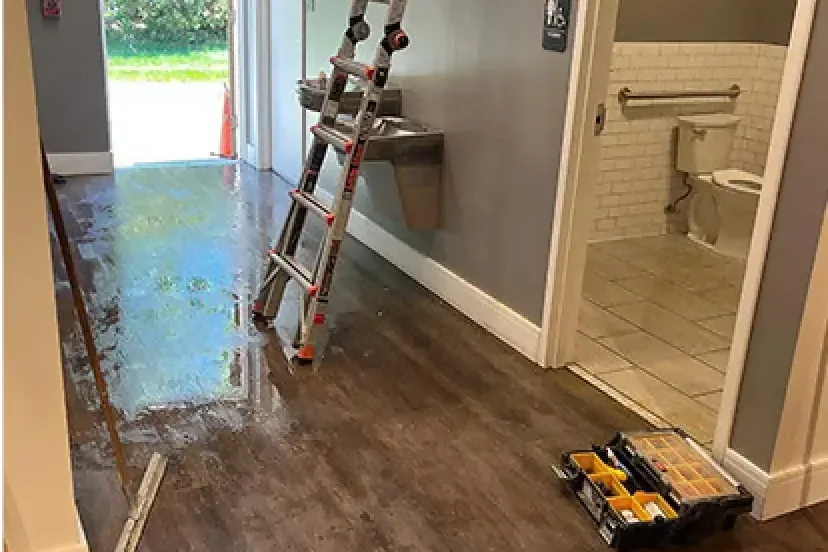
Business losses carry pressure that homes do not: tenants, inventory and customers are all affected. Crews plan the work to keep unaffected rooms open wherever the water allows, and they tell the manager what to expect.
First steps for commercial water damage
- 1
Shut the water off
Close the valve serving the suite or the building.
- 2
Call the property manager
Tell the owner so other suites can be checked.
- 3
Protect equipment
Move records and electronics out of the wet area.
- 4
Photograph the loss
Capture each wet room for the carrier.
What does commercial water damage cost in Belleair, FL?
One suite or office often runs $3,000 to $10,000. Several suites or a floor reach $10,000 to $35,000, and a building-wide loss runs $35,000 to $90,000.
One suite or office
- Water extracted
- Structural drying
- Daily readings
Several suites or a floor
- Containment set
- Phased drying
- Claim paperwork
Building-wide loss
- Large-loss equipment
- Night and weekend crews
- Extended drying
These are typical ranges, not a quote. The water category, the square footage, the material class and how soon drying began change the total most, and the water damage cost calculator narrows the range.
How commercial water damage is handled, step by step
The walkthrough starts with a moisture map, so the drying plan matches what is truly wet. Air movers and dehumidifiers stay until the meters read dry, not until the surface looks dry.
Assess
Water source, scope and tenants are mapped first.
Contain
Barriers protect dry suites and shared halls.
Extract and dry
Equipment is phased by area and tenant.
Document
Logs and photos go to owner and carrier.
Plans for shared buildings
In a building with several suites, water travels through ceilings, shared walls and floors. Containment protects dry neighbors, and phased drying lets each area return to use as readings pass. Records for the property manager show which suite the water came from.
- Containment barriers around wet suites
- Phased equipment plans for each area
- Night work where operations allow
- Daily updates for the property manager
Large and older buildings
Large and historic buildings, a hotel such as the Belleview Inn among them, call for phased plans so one wet area does not close the whole property. Moisture maps show where the water went before any wall is opened.
Sprinklers and backflow devices
The town requires a backflow prevention device for any business or addition with a fire sprinkler system, an alternate water source or reclaimed water access. A sprinkler head failure or a device leak can flood a floor, and the records identify the source.
Commercial water damage here and in nearby towns
Commercial crews cover ZIP 33756, including the Indian Rocks Road, Ponce de Leon Boulevard and Belleview Boulevard corridors, as well as shared buildings on the town's older streets.
The same service nearby: commercial water damage in Hudson, Tarpon Springs, Tampa.
Every water damage service for this town · every town covered
Related water damage services in Belleair
Commercial Water Damage questions, answered
Can a business stay open during drying?
Often partly. Containment and phased plans keep dry areas usable while wet suites are dried, though the source and safety decide what is possible.
Who is responsible, the owner or the tenant?
That depends on the lease and the source of the water. Photos, readings and a clear record help owners, tenants and carriers settle it.
How are sprinkler leaks handled?
The water is stopped at the source, then extracted and dried like any other loss. The town requires backflow prevention devices for properties with fire sprinklers, and a device leak counts as a source.
What records do carriers expect?
Dated photos, moisture maps, daily readings, equipment logs and an itemized list of removed materials. These show scope, timing and the dry result.
Does a commercial job need a permit?
Some repairs do. After a declared emergency, over the counter permits can cover items such as drywall, flooring and roof covering repair, and the Building Department can say what applies.
Protect the space and the records
A crew contains the loss, dries in phases and documents each step for the owner, the tenant and the carrier.
(888) 621-2041Reach a commercial dry-out crew- Crews sent out day and night
- Dried to the IICRC S500 standard
- Daily readings for the adjuster
- Find us on Google